

Features in customers’ hands don’t guarantee value creation. We may think we know what customers want and how to collect business value from new features, yet we’re often wrong.
It’s not about how fast you can ship new features. It’s about how fast you can learn what works and what doesn’t so you adapt course fast enough.
Brought to you by WorkOS
Your app, Enterprise Ready. Ship enterprise features like SSO, SCIM, and Audit Logs in minutes.
Struggling as a B2B PM? Read the Free Enterprise Ready Guide for PMs
Product experiments can help you accelerate learning. Let’s take this post to explore how product teams can benefit from pilot testing. We will cover the following:
What’s pilot testing?
Benefits of pilot testing
Steps to conduct a successful pilot testing
Tools and techniques for pilot testing
Challenges in pilot testing
Gmail case study
What is pilot testing?
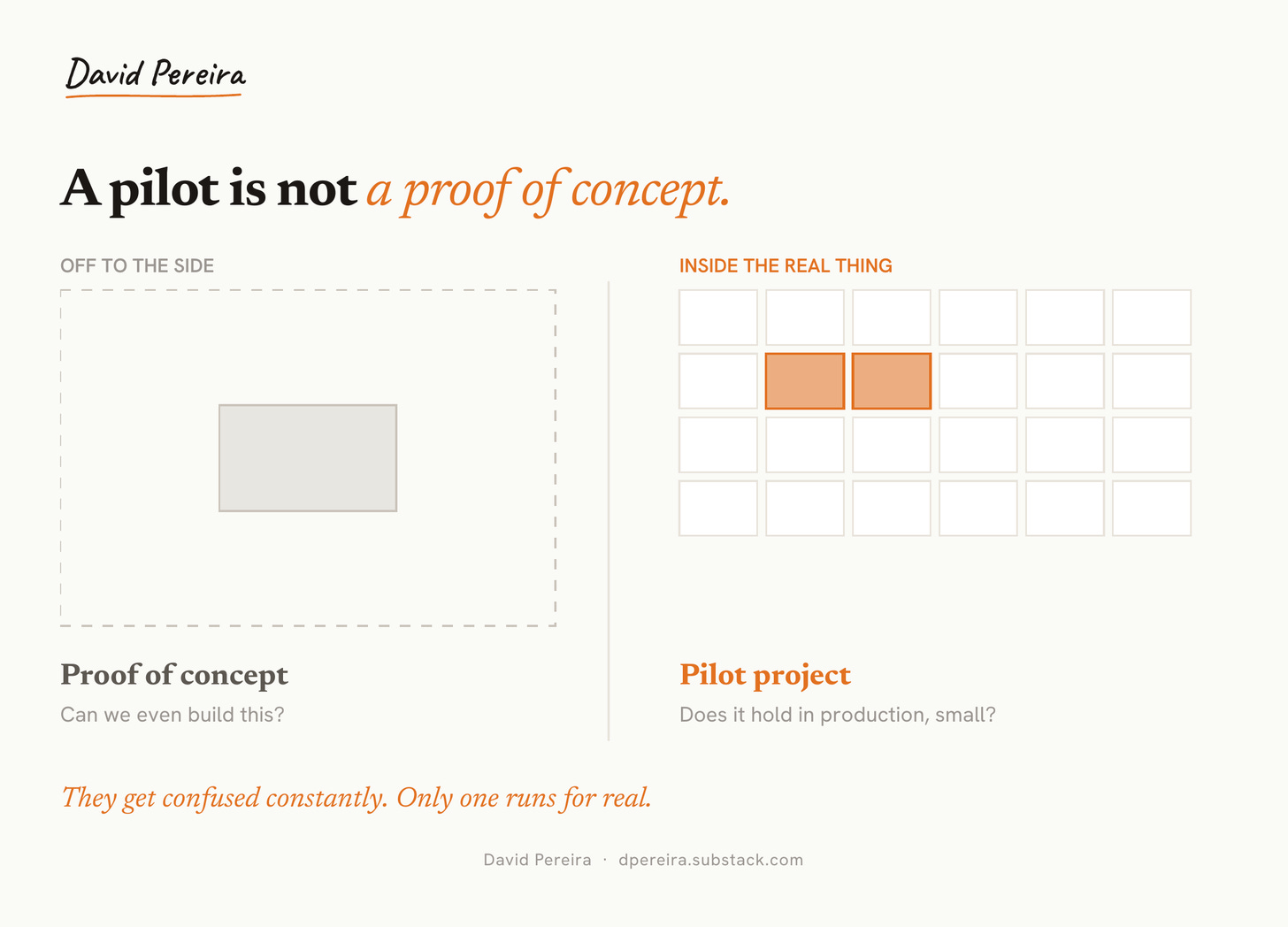
Pilot testing is a method for evaluating products or features with a controlled group. The objective is to be as close as possible to those who will use the product so that you uncover challenges and opportunities.
Product teams quickly iterate the product during pilot testing until the control group benefits the most. The participants in such testing are often hand-picked and highly limited, as the product team wants to be close to the users.
You may wonder about the difference between beta and pilot testing. Beta testing focuses on more users interacting, meaning the group is uncontrolled but limited. Product teams can identify patterns and gather quantitative data. On the other hand, pilot testing helps product teams receive more qualitative feedback.
It is normal to start with a pilot and then move to beta. These techniques can complement each other and increase confidence in market success.
Benefits of pilot testing
You may wonder why you’d invest time in pilot testing if you had interviewed users, conducted prototype sessions, and collected considerable feedback before creating new features. It turns out that users surprise us. Interviews and prototypes give, at best, moderate evidence but not enough to justify an upfront investment without involving customers until the feature is incorporated into the product.
Pilot testing will help product teams with the following:
Evidence strength: As real users interact with the product, you receive feedback based on reality, not opinions. Ultimately making your evidence stronger.
Iteration: Within a controlled group, product teams can quickly iterate the product and receive direct feedback on what works and what doesn’t.
Learn from reality: Pilot testing isn’t a lab exercise but a natural product use.
Focus: Once you run a pilot test, you can learn about valuable features, confusing ones, and distractions, which empower you to remove confusion and ditch features that distract users. Finally, creating a more relevant product.
De-Risk: The more you interact with users in a natural scenario, the more prepared you become to scale your product. Pilot testing helps you de-risk your product ideas.
Steps to conduct a pilot test
Conducting a pilot test requires a minimum structure level and alignment. Here’s what I like defining before starting the pilot:
Objective: Set the goal for your pilot testing. Make it as measurable as possible. For example, 75% of pilot users signed up for the product release. You want the pilot’s result to increase confidence, so make the goal related to it.
Length: Define the duration of the pilot so everyone knows. Pilot testing takes time, as you need to collect feedback and iterate, so give reasonable time for it. Depending on your product, somewhere between 2 and 6 weeks tends to be enough.
Milestones: It’s vital to measure the results continuously. If you measure only the goal, you may learn too late when you miss it. Set a few milestones to help product teams inspect and adapt.
Team: Pilot testing requires focus to thrive. Define a dedicated team to manage such an experiment. Ideally, this team should be entirely focused on it.
Pilot Sample: Define the number of users you want to invite for your pilot testing. This will depend on your scenario. For B2C products, I’d recommend limiting to 20 in the early stages. For B2B, the story is different as it evolves more people. Getting five companies would be great, but you can be happy with three participants.
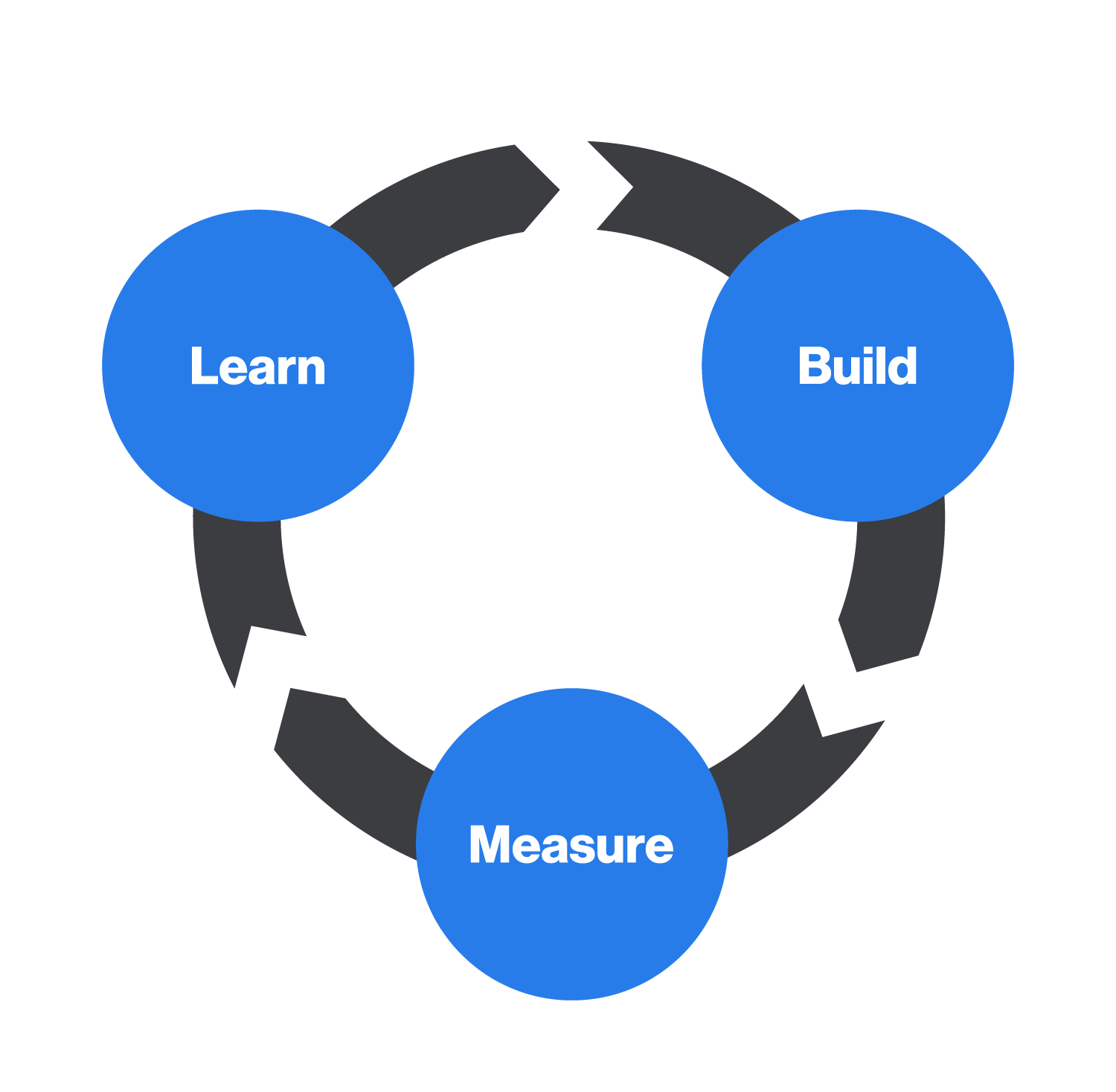
As you clarify the previous points, it’s time to move on to execution and iteration. Overall, a lean startup approach can benefit you.
Build: Start by building the least amount necessary to run the pilot. The goal is first build to learn, then to scale. Good enough is better than perfect.
Measure: As you release the pilot, get closer to the participants. Observe how they use it (shadowing) and collect qualitative feedback (interviews, surveys). The goal is to uncover what’s helpful and what’s not.
Learn: Reflect on what you measured and name the learnings. This should empower you to decide what to do for the next iteration.
Rinse & Repeat: Refine your product and repeat this cycle based on what you have learned. If you realize your pilot isn’t flying, you can drop it altogether. But if you identify tweaks that can make it valuable, go for it.
Tools and techniques for pilot testing
Given the available options, choosing the right tools for your pilot testing can be troublesome. Don’t bother with it. The goal is to learn from real users, not to deploy the best tools.
Here are the techniques I recommend:
Shadowing: If you can observe how they interact with your product, you will learn aspects you didn’t even know you didn’t know.
Moderated Sessions: Recruit the pilot users and have sessions, which you moderate to conduct them to run specific tasks and think out loud. You will learn about first reactions and where users get confused.
Unmoderated Sessions: These are similar to the previous ones but without moderation. Users receive the task and record how they perform it. The advantage is that you can reduce dependency. Yet, you lose the chance to interact with the user.
Customer Effort Score: You can benefit from CES. Add surveys on your product so users can share how easy it was to perform a task. This way, you will learn where they get stuck.
Data Analytics: Add the minimum level of data collection to assess user engagement, conversion, and frequent use. You want to understand how much your product resonates with your audience.
Heatmap: I recommend having heatmaps so you can understand where users put their attention and what they ignore. This will help you prioritize how to evolve your product and where to learn more in-depth from your users.
The above will accelerate learning, but you don’t need to limit it. Use your creativity. Yet, I recommend keeping in mind that your objective is learning as fast as possible. The longer it takes to learn, the riskier your product idea becomes.
Challenges and solutions in pilot testing
You will inevitably face different types of resistance and challenges. Let me share the three most common challenges with you and how you can avoid them.
1. First version
The pilot isn’t your first product version. Treating it that way will take too long to get to users’ hands.
A common mistake is defining an MVP and investing months into building it. That’s not the objective. The goal is to build enough to enable users to learn from it. Focus on the core aspects and leave the rest out.
Confronting your product against reality as fast as possible is mandatory. The advantage of a pilot is that it makes that possible with a small controlled group. You don’t need to fear repercussions. Embrace learning.
2. Lack of support
Some business stakeholders will be against pilot testing. Here are a few arguments you will receive:
I talked to 10 customers, and they want this!
Our competitors have this feature, we must build it!
We don’t have time to waste. Let’s ship it!
The above will increase the risks of failure. Everyone is happy if the approach is correct (which is rarely the case). Otherwise, you face the bitter taste of a considerable failure.
In such cases, I suggest taking 10% of the overall budget to run a pilot and learn whether investing further makes sense. When you limit the investment, you’ve got to be pragmatic and use the pilot to boost learning, enabling you to make better-informed decisions.
In short, strive to move from opinions to evidence.
3. Validation obsession
Many people confuse pilot testing with a validation of your product idea. That’s right up to a certain extent, but it’s a tricky approach.
We often fall prey to our biases when we try to prove ourselves right. We search for confirmation and usually find “positive signs” that our idea will fly. Yet, we fail to learn what we don’t know, missing valuable opportunities to make the product more relevant.
The goal isn’t to find reasons to build the way you want but to find reasons not to make it or to do it differently. Focus on falsifying your ideas instead of validating them. A learning attitude will help you uncover your blind spots.
GMail Case study
Since early 2000, Google has developed a practice of letting employees invest a day a week into a side project, which gives them the flexibility to explore wild ideas.
In 2001, Paul Buchheit, a software engineer, had the idea of creating a different way of handling emails. He was frustrated with limited storage, organization, and search options, so he came up with Gmail. The exciting aspect is how it moved from a side project to the most used email worldwide.
Pilot testing played a pivotal role in the success of Gmail.
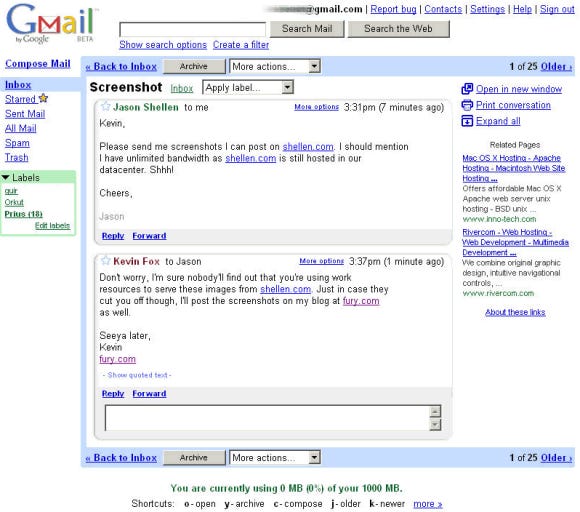
As Paul Buchheit evolved with the product, he decided to run pilot testing with internal users in early 2003. The idea was to learn how the product solved the challenges Paul encountered. The pilot testing showed the following:
Insufficient storage: As googlers used Gmail, the storage quickly filled up, frustrating them.
Confusing design: Users struggled to understand how to interact with Gmail. It wasn’t intuitive enough.
Inaccurate search: The search results were sub-optimal, making it harder to find what users wanted.
Given the feedback, the team improved the project, including adding 1 GB of storage, something unimaginable in 2003. After that, Googlers gained trust in the product, and it was time to finalize the pilot as it achieved its objectives.
After the successful pilot, Google didn’t release Gmail to everyone. First, it went on a beta release, where users could get in only with invitations. The objective was to slowly scale and learn how the product solved users’ challenges at scale.
Gmail was officially launched in 2004 after successfully completing beta testing. Today, it’s the most used email worldwide. I perceive the initial pilot as fundamental to its success because it reviewed core flaws before reaching a mass audience. When the product arrived in users’ hands, it was already a better, more polished, and consistent version.
Key takeaways
Pilot testing isn’t the first version of your product but a fast way of learning from real users in a controlled group.
Pilot testing aims to yield learning, not to prove yourself right. Strive to uncover your blind spots instead of letting false positives illude you.
When you run pilot testing, most of your ideas will not go beyond it because you will discover that investing in them isn’t worth it. It’s normal to drop ideas after running a pilot.
Beta testing isn’t the same as pilot testing. The first aims to address an uncontrolled group in a higher volume, collecting relevant quantitative data. The second targets a small controlled group, enabling you to gather qualitative data.
Whenever you’re ready, I can help you boost your career
Mastering Product Discovery: Cohort-based course for you to learn what most product people miss about product discovery. It’s hands-on and straight to the point. It had attendants from 30+ countries. Join us now to level up your product game.
Untrapping Product Teams Book: A book about hope for product folks. It gives you multiple perspectives on how to face reality and act today for a better tomorrow. Read by thousands of people in 70+ countries.
Anti-BS Product Management: Self-paced course to help drive value when almost everybody distracts you. You will learn the most common - and avoidable - mistakes made by product people and how to overcome them. You can expect lessons based on reality, not fantasy.
How to Craft a Product Strategy that Works: If you’re confused by what a product strategy is and how to craft one that works, this course helps you solve that. You will get all you need to create a sound strategy.
Product Discovery Done Right: How can you break free from the feature factory madness? Applying mindful product discovery will equip you to gradually move from outputs to outcomes. This self-paced course is dedicated to helping you learn what most product people miss out on.
What would pilot testing be different from MVP or A/B testing?